LEARN
Two-player Siamese Mah Jongg, what changes
Have one person to play with? Siamese gives you both two hands to build, with plenty of chances to try different ideas. Here's what changes.
Two players, two winning hands
Siamese uses the same tiles, card notation and joker placement rule as American mahjong. You play against one opponent and each build two hands on two racks. These lessons use the Learner card.
| What changes | American | Siamese |
|---|---|---|
| Players and hands | Four players, one hand each | Two players, two hands each |
| Starting tiles | East gets 14, others 13 | Each starts with 27, then East draws the 28th |
| Charleston | Pass before the first discard | No Charleston |
| Hidden tiles | Organise one hand | Move freely between your two racks |
| Calling | Expose a completed group, or call mahjong | Also choose which rack gets the exposure |
| First mahjong | Ends the game | Declare 14 tiles, discard, and continue with 13 active tiles |
| One dead hand | That player stops drawing and calling | Continue with the other rack if it is still active |
| Winning on your own draw | All opponents pay double | No self-pick bonus |
| Wall game | Nobody pays | Each player receives 10, plus payment for any first mahjong already declared |
Plan both hands together
Your hidden tiles can move between racks whenever you want. Once you expose a group, it stays with the rack you chose.
You may use jokers in an exposure to save natural tiles for your other hand. Choosing rows that need different tiles often makes both hands easier to build. This is strategy, not a requirement.
Declare when you want to secure a hand
Your first declared hand stays face up and its tiles are fixed. Its jokers can no longer be exchanged. Waiting keeps those tiles available, but the game may end before you declare.
A second mahjong ends the game. So does a wall game or both racks becoming dead for one player. One declared hand plus one dead rack leaves that player with no turns, while the opponent continues.
Count your tiles
Before your first declaration: 27 between turns, 28 before discarding. Count hidden and exposed tiles together. After declaring: 13 active tiles between turns, 14 before discarding.
There is no replacement draw after a kong. At a physical table, build walls and keep track of your own count.
Score your hands
- First mahjong: card value. Second: double.
- An eligible jokerless hand doubles again. Declaring both mahjongs in one turn doubles both payments again.
- There is no self-pick bonus.
- Giving your opponent their second mahjong costs 25. This includes a discard completing the first of two mahjongs declared together.
- Both your racks dead costs a flat 100.
- A wall game pays each player 10, and a first mahjong already declared is still paid.
A double-mahjong claim takes priority in a tie. You cannot exchange jokers from a declared hand or the exposure that made a rack dead.
Keep the Siamese rules reference nearby for your first few games. You can check one difference as it comes up.
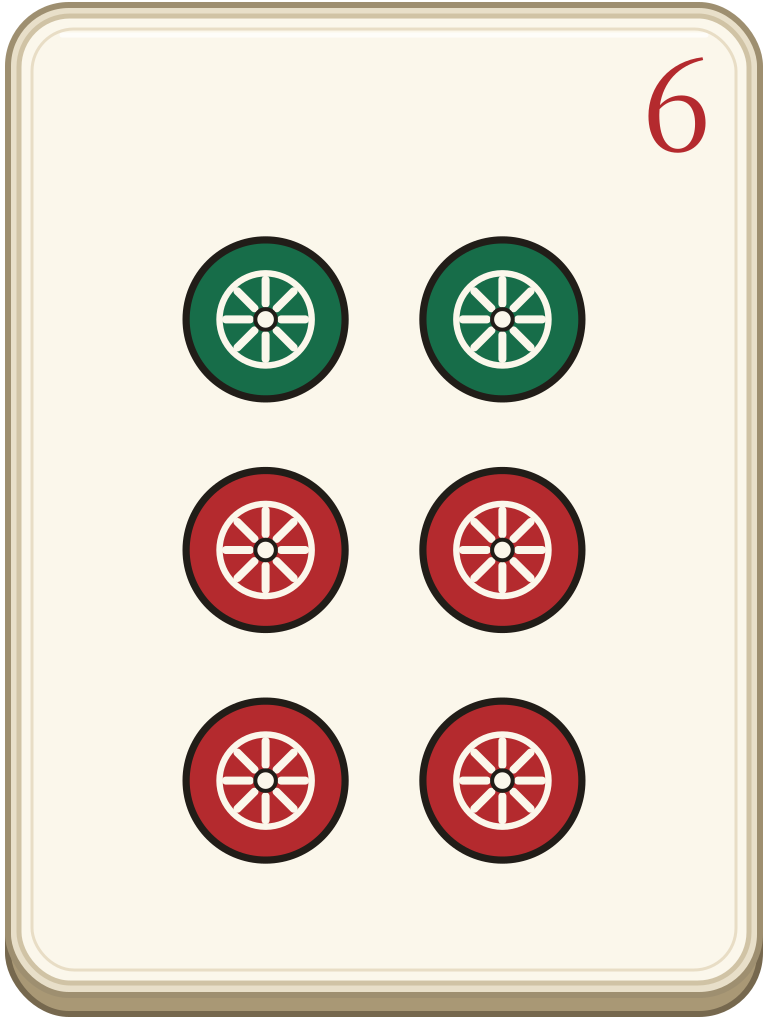
 A natural pair for the other hand
Taught in Two players, two racks, Arrange your two hands, Choose a rack when calling, Your first Siamese mahjong, When to declare, Siamese endings and scoring, Your first Siamese game.
Teaches on the Learner card · reviewed 2026-09-14