SIAMESE MAH JONGG · DAY S1
Two players, two racks
- You'll learn
- Start a Siamese game and track your 27 or 28 tiles.
- Time
- 5 minutes
- Builds on
- None
- Up next
- Arrange your two hands
- Why it helps
- With two hands to build, you have more possibilities to explore with each new tile.
SAVE YOUR PATH
Create an account
Save your progress and pick up where you left off.
Have one person to play with? Siamese gives you both two hands to build, using the tiles and groups you already know.
Two players, two hands each
In Siamese mahjong, you play against one opponent. Each of you has two racks and works toward two winning hands.
You each start with 27 tiles. East draws a 28th tile, then discards to begin. There is no Charleston.
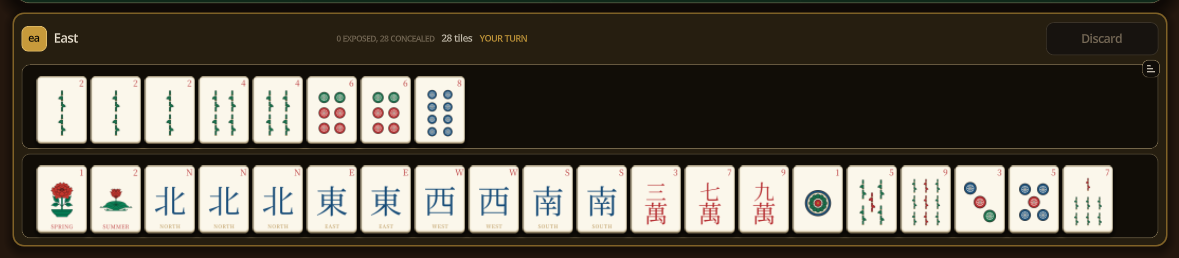
Count across both racks
Before your first mahjong, count all your tiles together, including exposures:
- 27 between turns.
- 28 after drawing or calling, before discarding.
Making a kong does not give you a replacement draw. TileClack shows your tile count beside your seat.
Your hidden tiles can move between your two racks. Where you place a tile helps you organise your plans, but does not commit it to a hand.
Keep tiles that help either hand
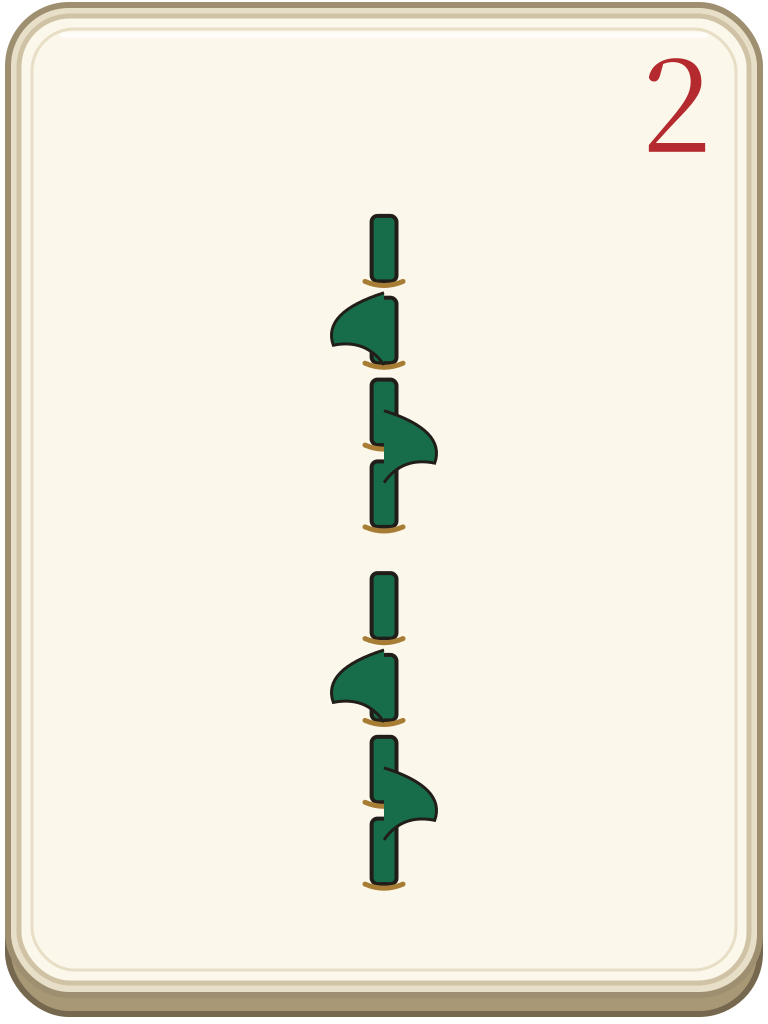
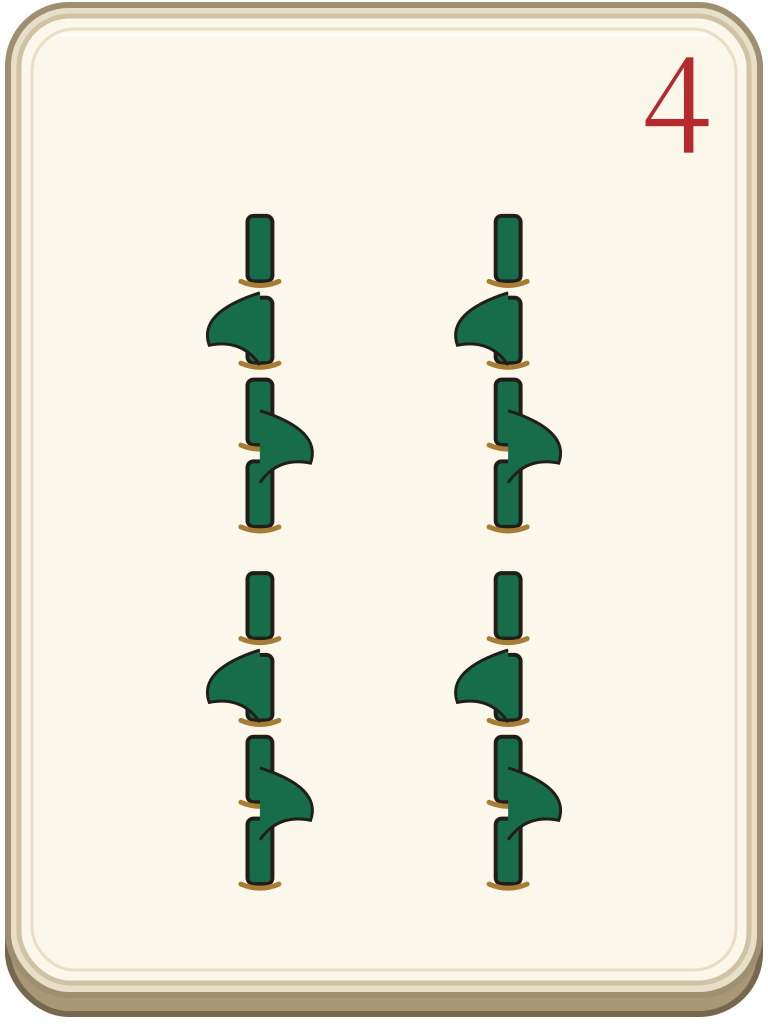
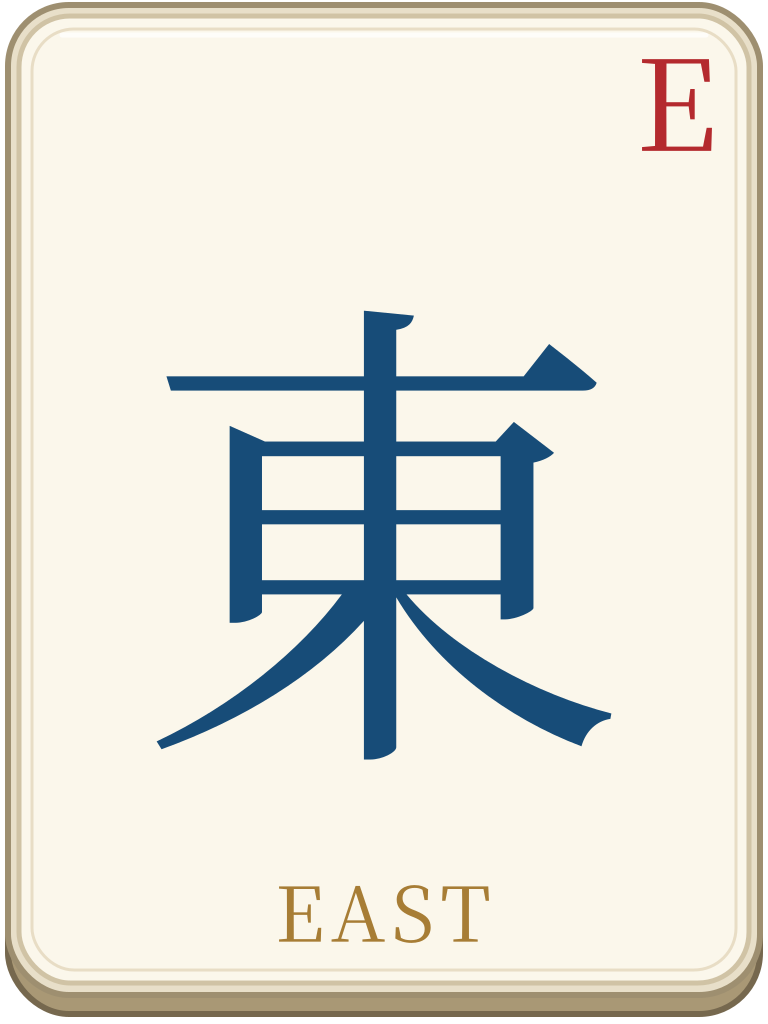
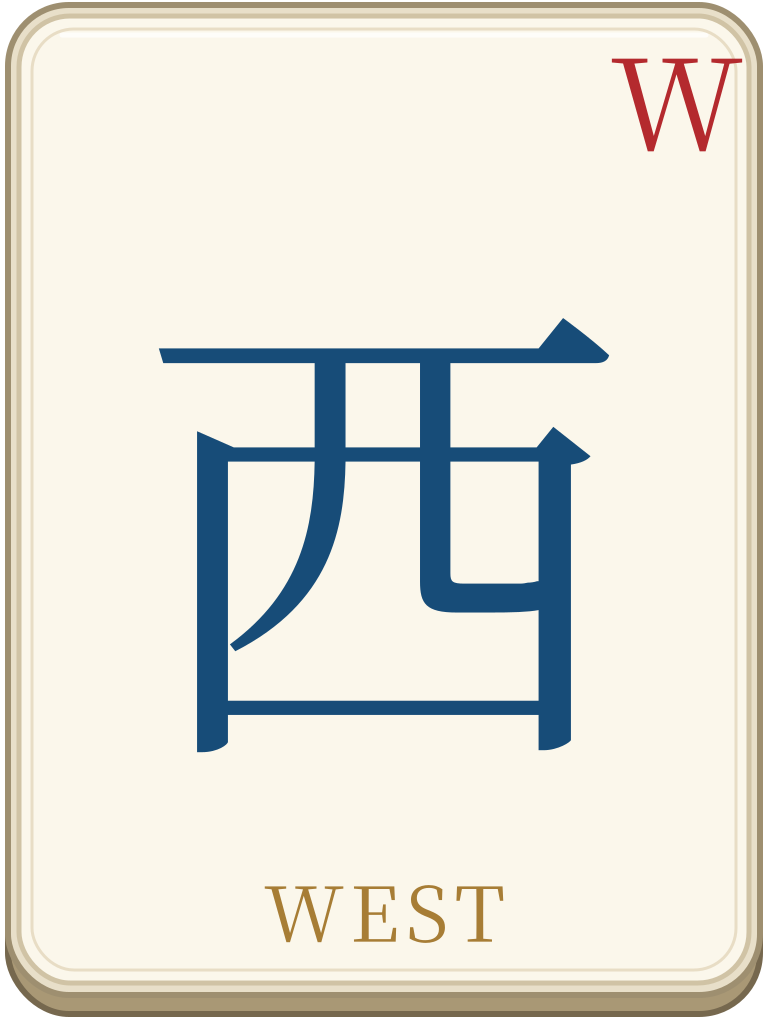
Give both possible rows a look before you discard. In this practice game, one rack is working toward 2468 and the other toward winds. Keep the tiles either row needs.
Your opponent is the only other player who can answer your discard. The Siamese differences page lists the other changes from American play.
At a physical table, a quick count helps you keep track of both hands. Standard Siamese play uses walls, including in tournaments.
 Toward winds
Remember
Two players. Two racks each. No Charleston. 27 tiles between turns, 28 before discarding.
Teaches on the Learner card · reviewed 2026-09-14