SIAMESE MAH JONGG · DAY 5
Wall games and dead hands
- You'll learn
- Learn what happens when the wall runs out or a hand becomes dead.
- Time
- 6 minutes
- Builds on
- Joker exchange
- Up next
- Two players, two racks
- Why it helps
- You'll know what happens when a game has no winner or a hand can no longer continue.
SAVE YOUR PATH
Create an account
Save your progress and pick up where you left off.
Practise this lesson with one opponent. This reference uses the American lesson examples, with Siamese differences noted.
Some games end without a mahjong. That is a normal part of play, and knowing how endings work helps you follow the whole table.
When the wall runs out
If no one wins before the wall runs out and the final discard is settled, you have a wall game. In American mahjong, nobody wins and nobody pays.
You can still call the final discard for mahjong. Check it before passing. A wall game doesn't mean you did anything wrong. You'll see them as you learn, and they remain part of the game.
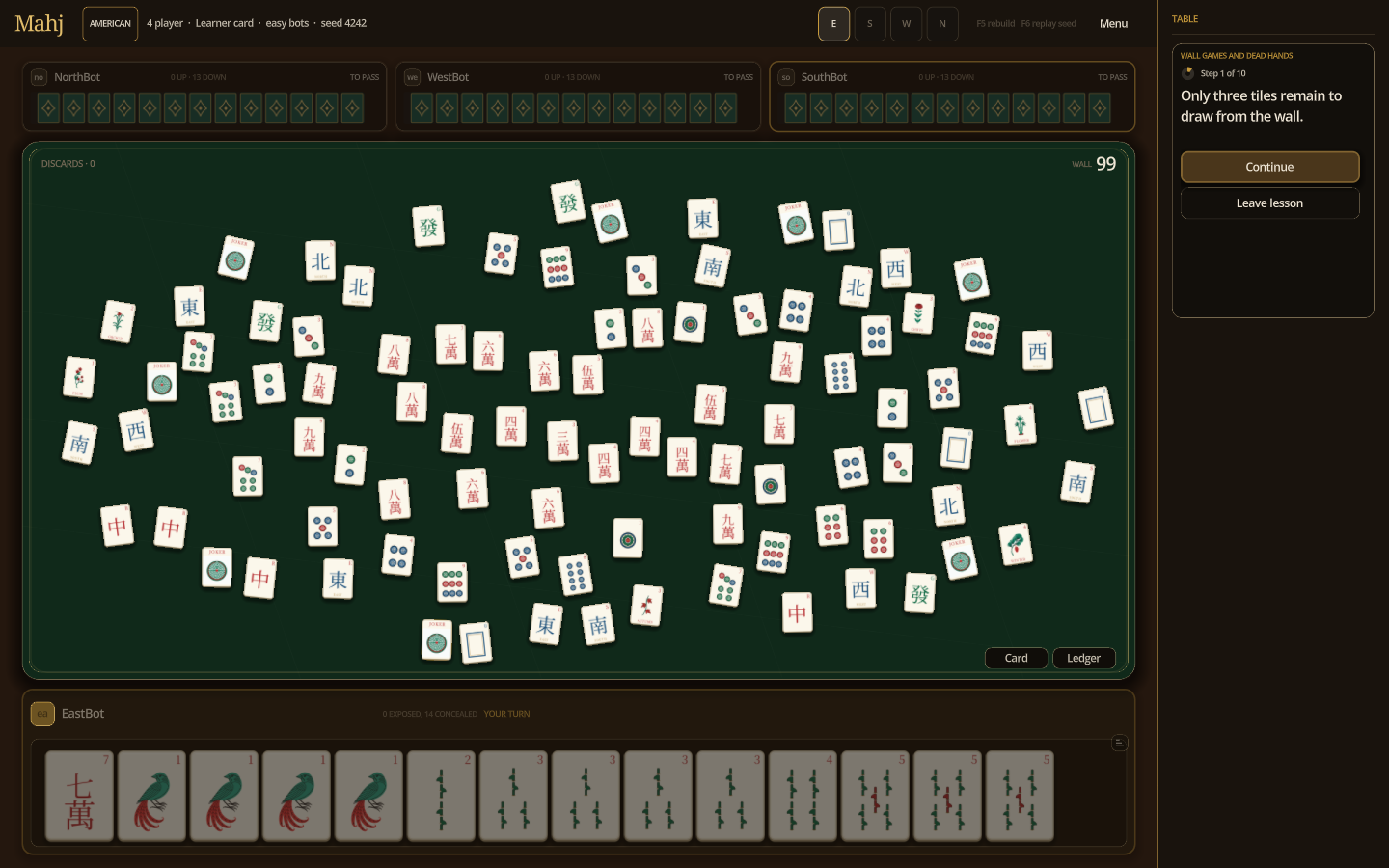
Siamese scores a wall game differently: each player receives 10 points, and a first mahjong already declared is still paid.
When one hand is dead
An exposure that fits no row on the card makes the hand dead. In American play, that player stops drawing and calling but still pays the winner. The other players continue.
TileClack marks the hand dead automatically. At a table, another player must call it based on visible tiles confirm.
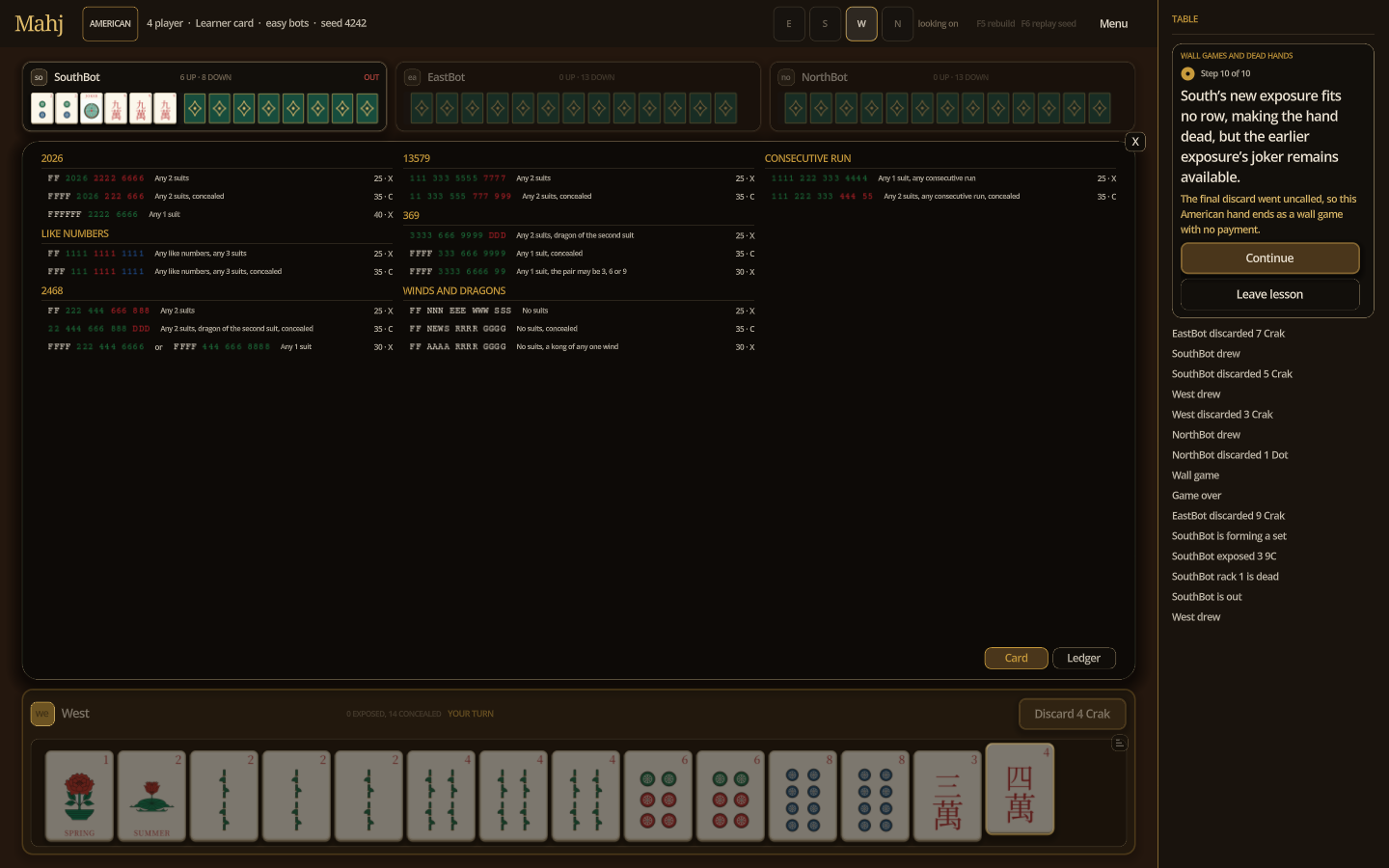
Check which jokers remain available
There may still be a useful joker on a dead rack. You may still exchange jokers in earlier valid exposures. You cannot exchange a joker in the exposure that made the hand dead.
In Siamese, one dead rack leaves you playing with the other. If your other rack is already declared, you stop taking turns and your opponent plays on.
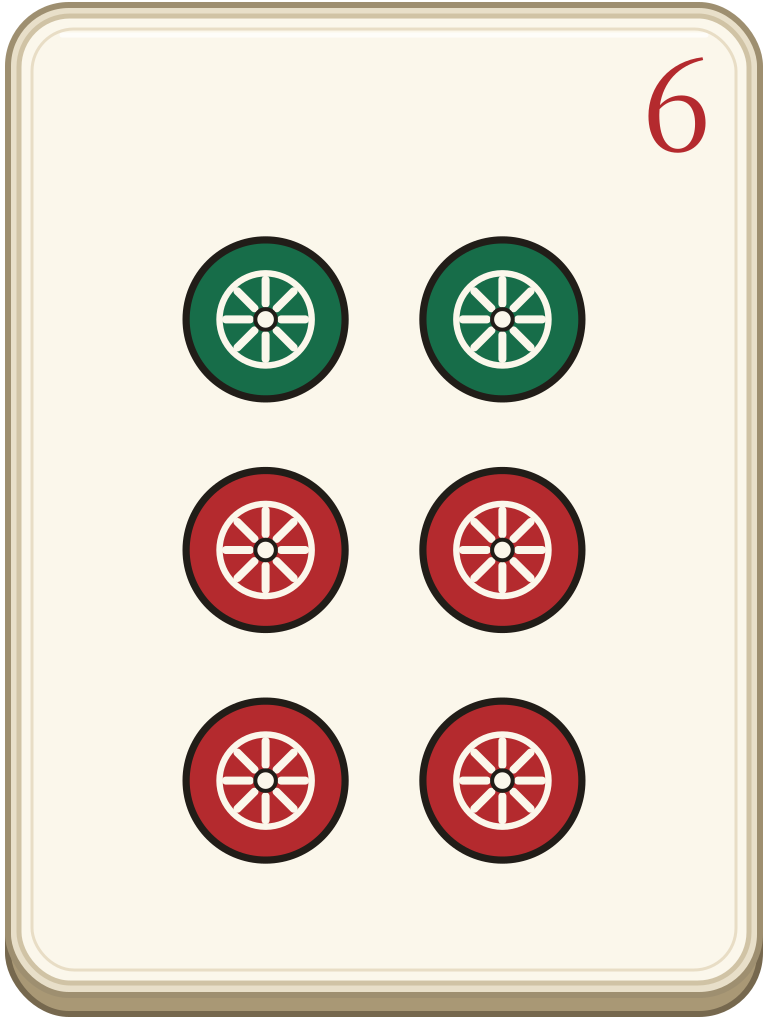
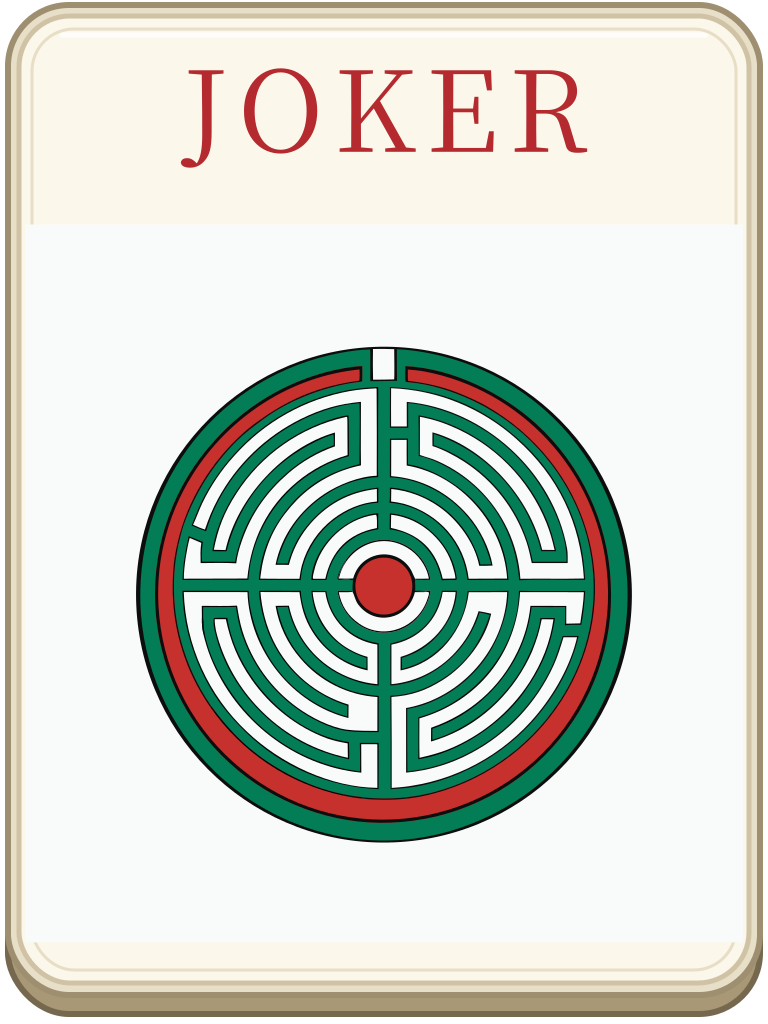 Matching tile to exchange
Remember
A wall game ends the game without a winner. A dead hand stops that hand from playing. Earlier valid exposures can still offer jokers.
Teaches on the Learner card · reviewed 2026-09-14