AMERICAN MAH JONGG · DAY 3
Exposed, concealed and dead hands
- You'll learn
- Check whether a row allows calls and recognise an impossible exposure.
- Time
- 6 minutes
- Builds on
- Choose a hand
- Up next
- Practise using the card
- Why it helps
- Knowing which calls suit your row helps you build the hand you have in mind.
SAVE YOUR PATH
Create an account
Save your progress and pick up where you left off.
Before taking a useful discard, give your card a quick look. Knowing which calls suit your hand helps you choose with confidence.
Check the row before you call
An exposure is a completed group you place face up after calling a discard. Once exposed, the group stays as it is. You can't return it to your hidden tiles or grow a pung into a kong.
You still have options after a call. You can change your target hand as long as the new row fits every exposure you've made.
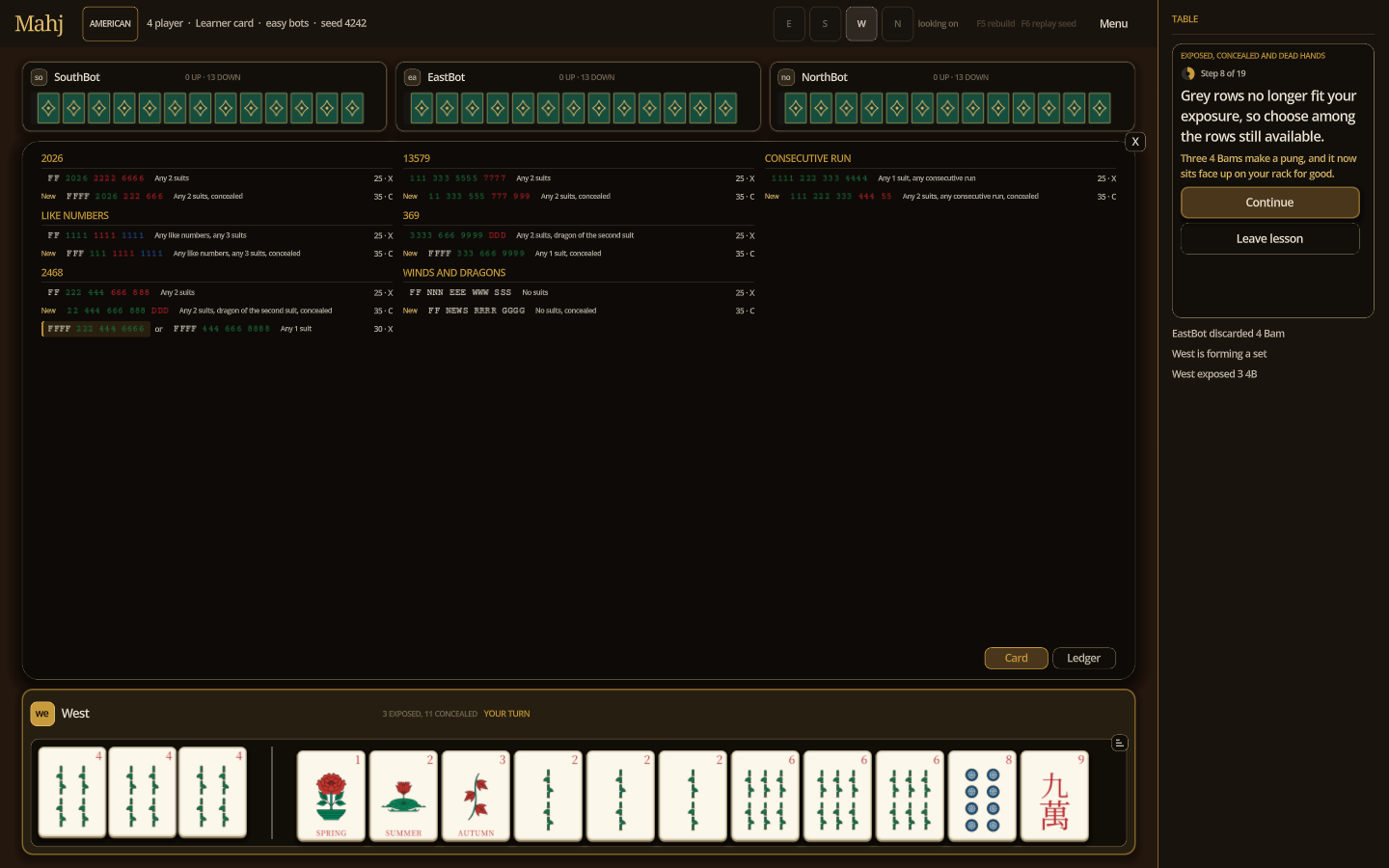
C means keep the hand concealed
A row marked C allows no exposures while you build it. You may call only the tile that completes the whole hand for mahjong.
You can still use jokers in matching groups of three or more. Concealed describes what you may show, not whether you may use jokers.
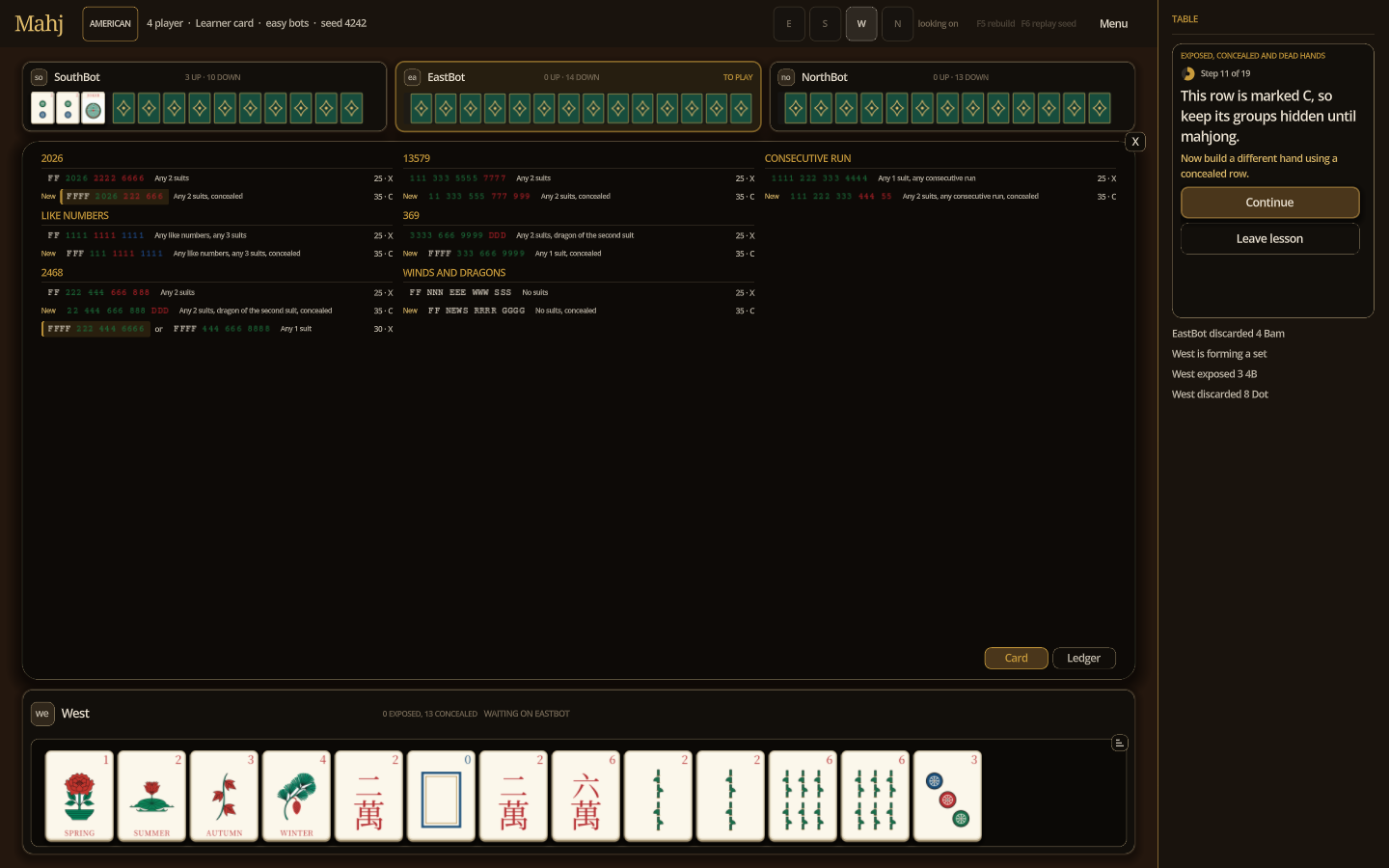
An impossible exposure makes a hand dead
A hand is called dead when its exposures leave it with no possible winning row. It's a game term for a hand that can no longer win. In American play, you stop drawing and calling, but still pay the winner.
TileClack marks an impossible exposure dead automatically. At a physical table, another player must call it based on visible tiles confirm.
Jokers in earlier valid exposures can still be exchanged. Jokers in the exposure that made the hand dead cannot.
If you're unsure about a call, compare the group with your row before showing it. That small pause is a useful habit to build.
Remember
Check before calling: does this group fit your row, and does the row allow exposures? C allows only a winning call.
Teaches on the Learner card · reviewed 2026-09-14