AMERICAN MAH JONGG · DAY 5
Joker exchange
- You'll learn
- Swap matching natural tiles for jokers in exposed groups.
- Time
- 7 minutes
- Builds on
- Practise from the deal
- Up next
- Wall games and dead hands
- Why it helps
- A matching tile on your rack could earn you a useful joker from an exposed group.
SAVE YOUR PATH
Create an account
Save your progress and pick up where you left off.
An exposed joker is worth a second look. A matching tile in your rack could let you bring that joker into your own hand.
Trade a matching tile for an exposed joker
If you hold the tile an exposed joker represents, you can swap it for that joker. This is a joker exchange. The matching tile is called the natural tile.
Suppose an exposure contains two 6 Dots and a joker, and you have a spare 6 Dot. You can put it into the group and take the joker. The exposure still counts as three 6 Dots.
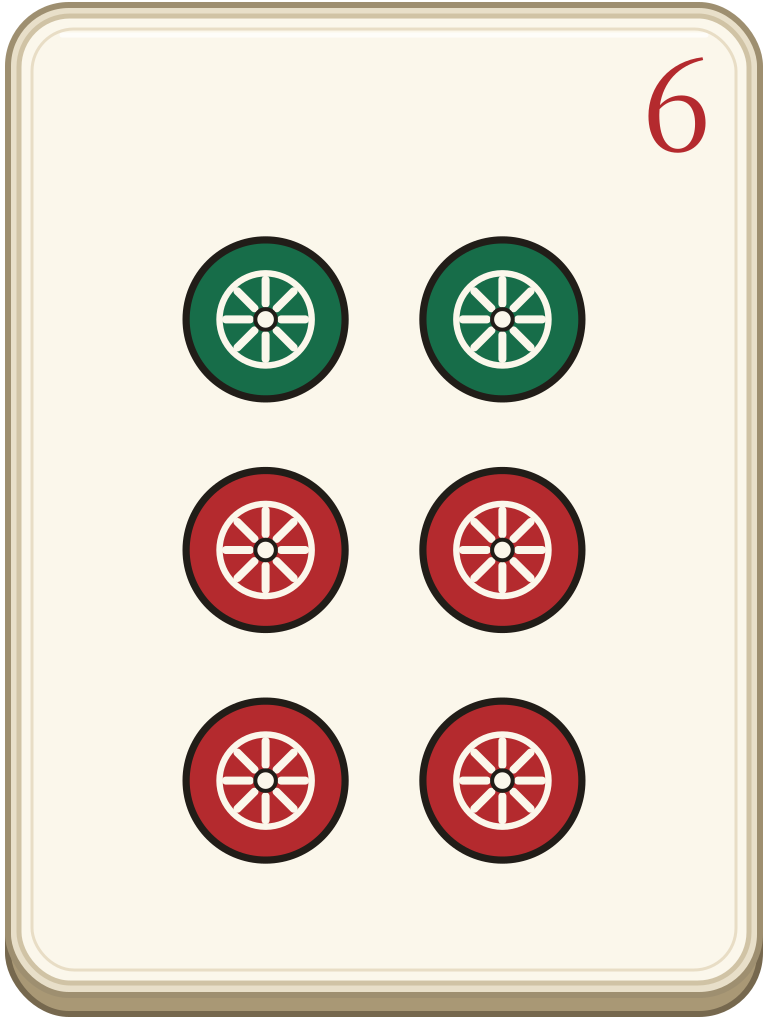
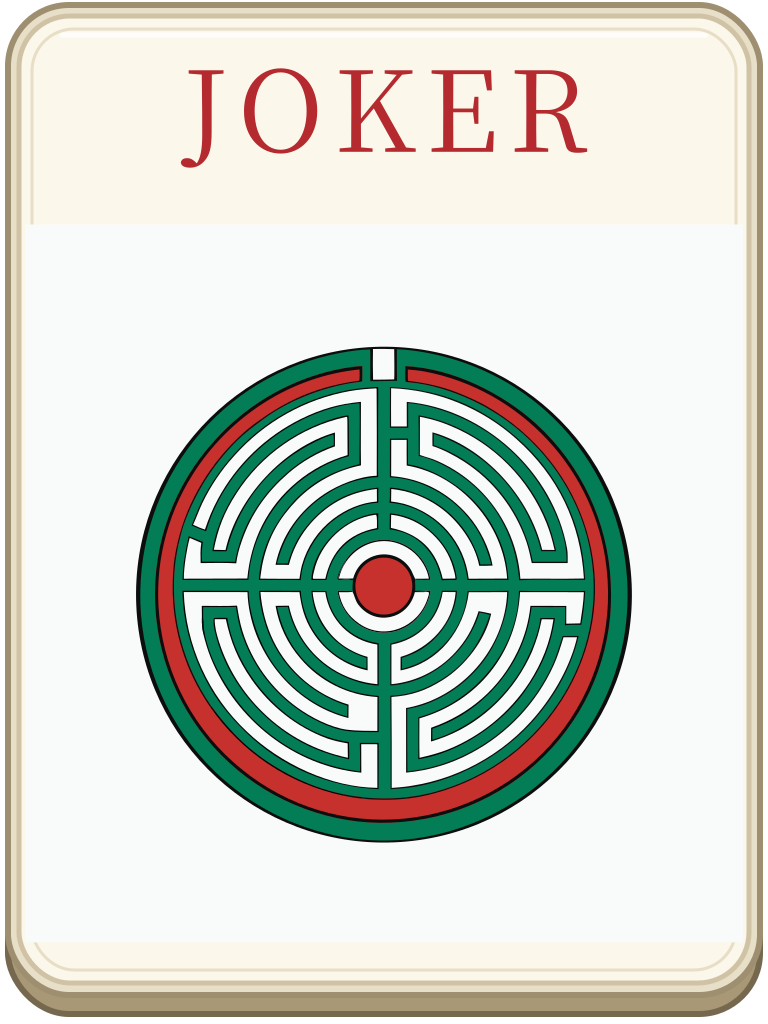 Your matching tileAfter: exposed pungNow on your rack
Exchange during your own turn
Draw or call first. Exchange before you discard. You may exchange with your own exposures or another player's, and you may make more than one exchange in a turn.
In TileClack, tap an exposed joker when you hold its matching natural tile. The exchange happens immediately.
At a physical table, announce the exchange and hand over your tile. Let the owner give you the joker.
You need the natural tile in your hand
It can be tempting to reach for a discarded tile that matches an exposed joker. For an exchange, though, the natural tile needs to be in your hand, and it needs to be your turn.
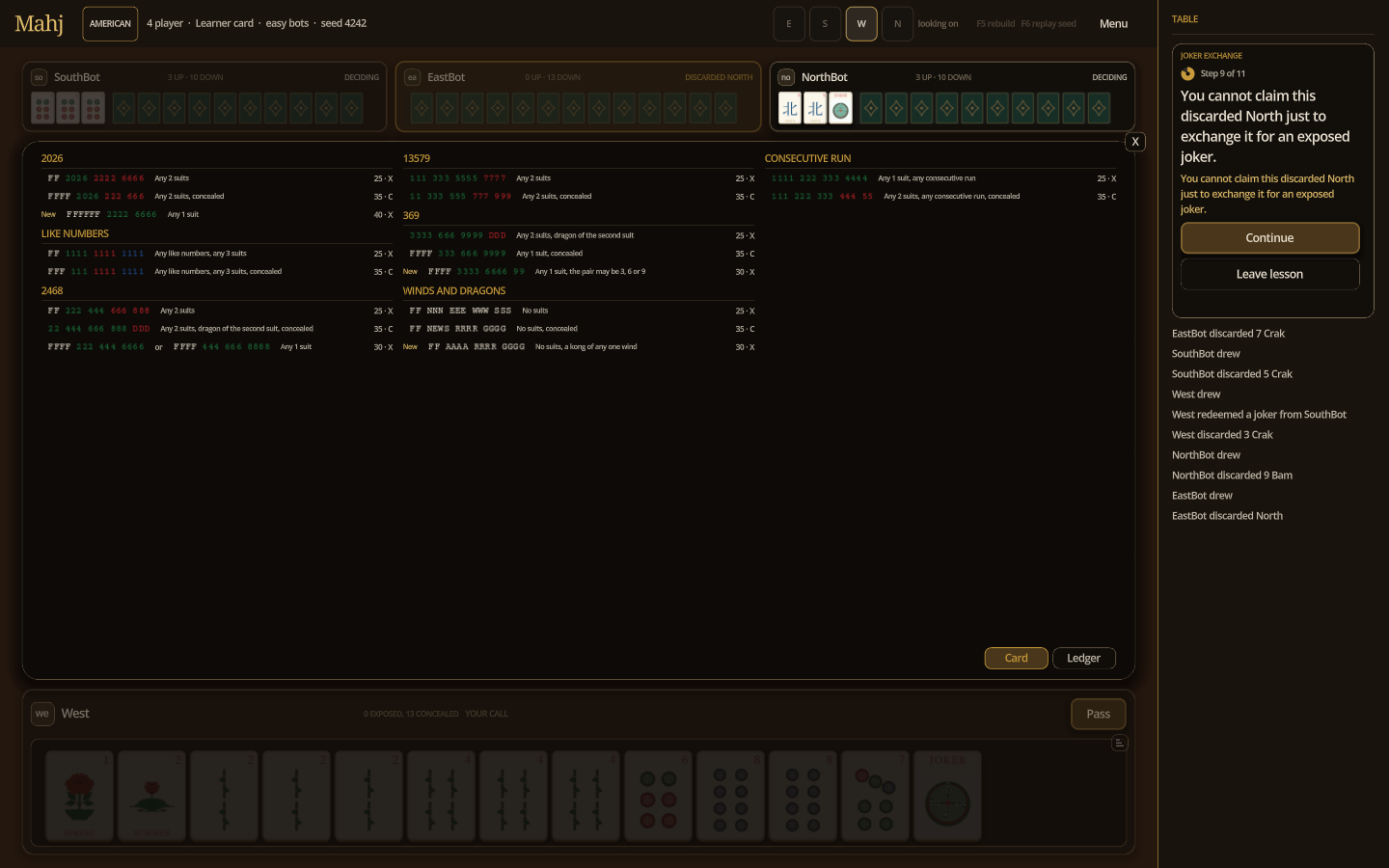
A joker in a declared Siamese hand cannot be exchanged. Neither can a joker in the exposure that made a hand dead. Earlier valid exposures on a dead rack remain available.
Remember
Your turn. Your matching tile. Exchange before discarding. The joker you receive still belongs only in matching groups of three or more.
Teaches on the Learner card · reviewed 2026-09-14